
Sopa seca (Chincha basil spaghetti)
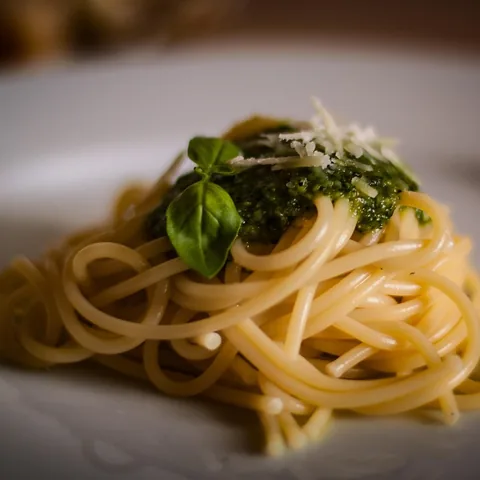
Despite its name, sopa seca is not a soup but spaghetti cooked directly in a fragrant broth of blended basil, ají panca, tomato and onion until the pasta absorbs every drop. The result is deep green-red, herby and full of flavour, often with chicken cooked alongside. In Chincha and Cañete it is traditionally paired on the same plate with carapulcra, a combination known as “la sopa y la cara”.
Diets
Allergens
Contains (in a typical recipe):
What it is made of
Recipe
Ingredients
- 500 g spaghetti, broken in half
- 4 chicken pieces
- 1 large bunch of basil
- 2 tbsp ají panca paste
- 2 tomatoes
- 1 onion, chopped
- 4 garlic cloves
- 1.2 l chicken stock
- 2 tbsp oil
- Salt and pepper
Method
- Brown the chicken in oil and set aside.
- Blend basil, tomato and a little stock into a smooth green sauce.
- Fry onion, garlic and ají panca until soft and fragrant.
- Add the blended sauce, the chicken and the stock and simmer for 20 minutes.
- Add the spaghetti and cook, stirring, until it has absorbed the liquid and is tender.
- Rest for a few minutes and serve, ideally with carapulcra.
How to make it lighter
- Use wholewheat spaghetti.
- Remove chicken skin before cooking.
- Serve a smaller portion with a fresh salad.
History
The dish is linked to the Afro-Peruvian communities of Chincha on Peru’s southern coast, where it is served at weddings and festivals. The name, “dry soup”, refers to the way the broth is absorbed by the pasta.
Count it in one photo
Point your camera at the table — Me Nutrition recognises Sopa seca (Chincha basil spaghetti) and every other dish, with calories and macros for each. Ate only half? Slide it.
Download on the App StoreSimilar dishes
Values are estimates per 100 g for a typical recipe; home and restaurant versions vary. Diets and allergens are worked out from the ingredients of a typical recipe — always check with whoever cooked the dish. Not medical advice. Nutrition data: Me Nutrition dish database v15. How we count →