
Tamal verde (green corn tamale)
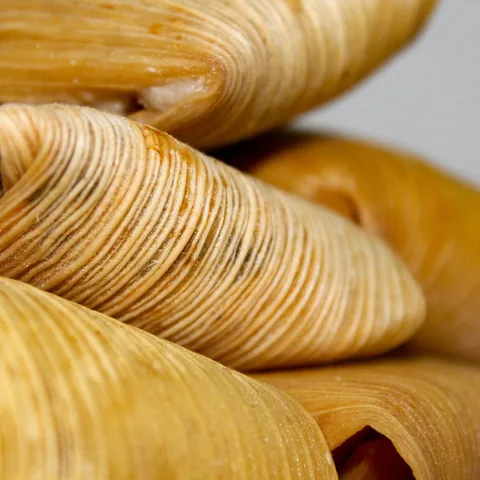
Peruvian tamal verde is made from fresh corn kernels ground with plenty of cilantro and a little ají amarillo, mixed with fat into a soft, bright green dough. A piece of chicken, sometimes with an olive or slice of egg, is placed inside before the dough is wrapped in fresh corn husks and steamed. It is moist, slightly sweet from the young corn and fragrant with herbs, and is usually eaten for breakfast with salsa criolla.
Diets
Allergens
None of the 14 major allergens in a typical recipe.
What it is made of
Recipe
Ingredients
- 8 ears of fresh corn (about 1.2 kg kernels)
- 1 large bunch cilantro
- 1 tbsp ají amarillo paste
- 1 onion, 2 garlic cloves
- 100 ml oil or 100 g lard
- 400 g cooked chicken, in pieces
- fresh corn husks
- salt
Method
- Blend the corn kernels with the cilantro and ají amarillo into a coarse paste.
- Sauté onion and garlic in the fat, add the corn paste and cook, stirring, 15 minutes until thick.
- Season and let the dough cool slightly.
- Lay two husks overlapping, spread dough, add chicken and cover with more dough.
- Fold the husks into a parcel and tie.
- Steam for 50–60 minutes and serve with salsa criolla.
How to make it lighter
- Cut the fat in half; the fresh corn keeps the dough moist.
- Use chicken breast as filling.
- One tamal with a big salad makes a balanced meal.
History
Steamed corn parcels were eaten in the Andes long before the Spanish arrived, and today many regional tamales exist in Peru. The green version made with fresh corn and cilantro is especially typical of the northern coast and of Lima's weekend breakfasts.
Count it in one photo
Point your camera at the table — Me Nutrition recognises Tamal verde (green corn tamale) and every other dish, with calories and macros for each. Ate only half? Slide it.
Download on the App StoreSimilar dishes
Values are estimates per 100 g for a typical recipe; home and restaurant versions vary. Diets and allergens are worked out from the ingredients of a typical recipe — always check with whoever cooked the dish. Not medical advice. Nutrition data: Me Nutrition dish database v15. How we count →